
Power Module Selection: Beyond the LTM4622 Checklist
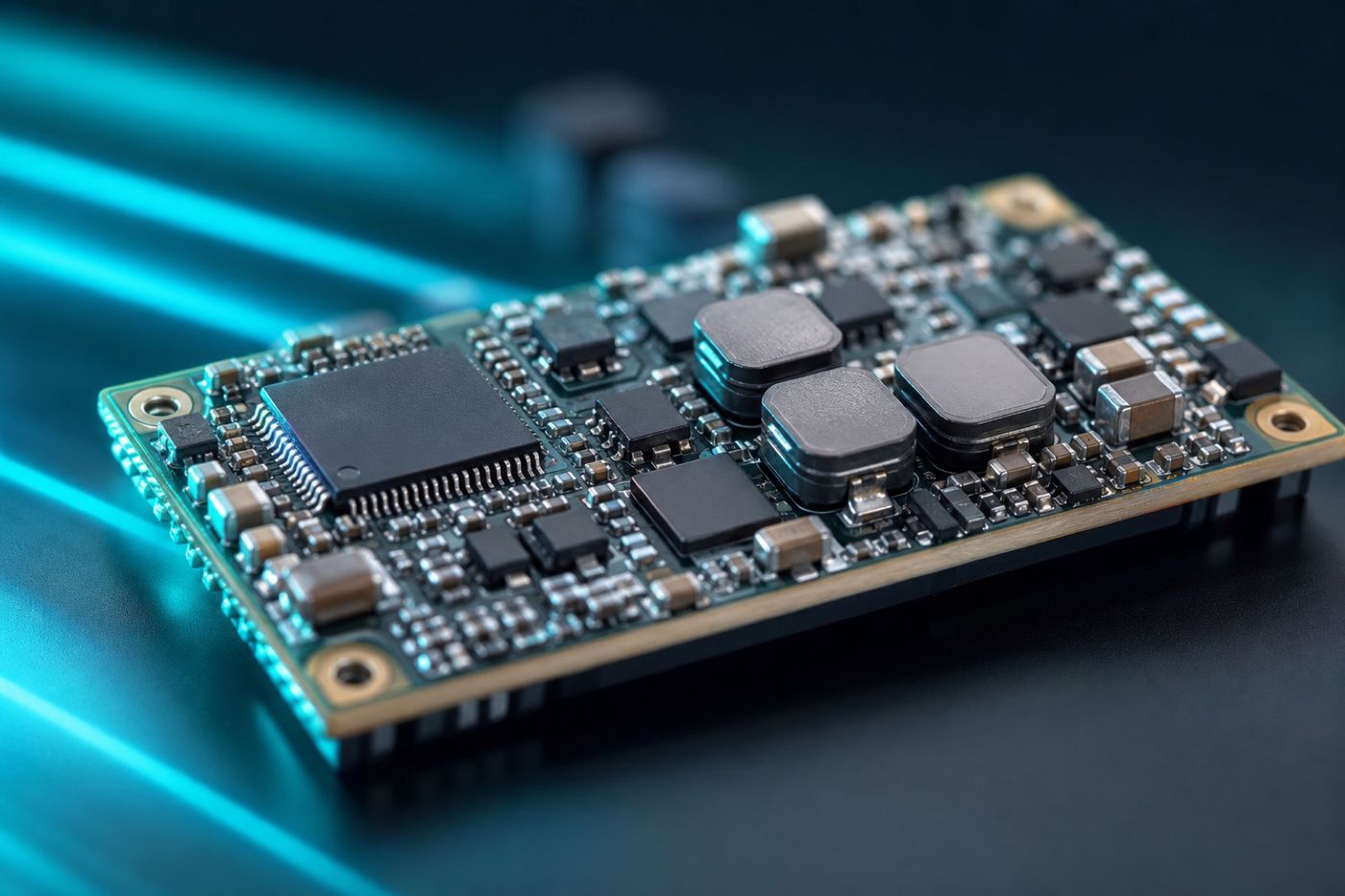
Point-of-load power modules integrate controller, FETs, inductor, and compensation into a thermally characterized package—accelerating time-to-market for FPGA, ASIC, and processor rails. Analog Devices (Linear Technology heritage) LTM4622 dual 2.5A µModule regulators set expectations for density and transient response, but 2026 supply plans must compare parametrics, thermals, and franchise availability across TI, ADI, and Infineon alternatives available through Restar.
This technical note from Restar Editorial explains input/output ranges, thermal derating, EMI layouts, sequencing, and how to request module cross references via RFQ when LTM4622 or similar dual low-voltage modules face extended lead times.
Electrical Requirements Checklist
Input voltage range must cover brownout and surge without violating absolute maximum ratings. Battery-powered industrial gateways may see 9–36 V swings; verify module VIN max includes load dump scenarios if placed on automotive feeds.
Output voltage accuracy and load regulation: digital cores need ±2% or tighter including remote sense. Compare ADI vs TI modules at your expected load step (e.g., 0.5 A to 3 A in 10 µs) using vendor transient plots—not only DC load lines.
Efficiency at your operating point dominates thermal design. A module rated 95% at 50% load may fall at light load when always-on rails leak current; model total board heat, not peak marketing curves.
Thermal and Mechanical Integration
Module datasheets specify θJA on standard JEDEC boards. Your 12-layer FPGA carrier with dense vias differs—request thermal images or use vendor simulation tools. Keep clearance around inductor tops for airflow; conformal coat adds thermal resistance.
For high-side power stages near IGBT blocks such as APT50GH120B motor inverters, separate noisy DC-link switching from sensitive 1.0 V FPGA rails with partition and shielding; module placement beats filter over-sizing alone.
Use the solutions library for validated thermal pad patterns and via fence examples on ADI and TI reference boards.
Comparison Matrix (Illustrative Dual-Output Modules)
| Family | IO Count | VIN Range | IOUT | Control | Notes |
|---|---|---|---|---|---|
| LTM4622 class | 2 | 4.5–26 V | 2×2.5 A | Analog trim | High density LGA |
| TPSM84A21 class | 1 | 4–14 V | 4 A | Fixed / adjustable | Integrated input cap |
| ISL8210M class | 1 | 4.5–16.5 V | 15 A | PMBus | Industrial temp |
LTM4622-Class Alternatives: Decision Tree
If you need dual independent outputs under 3 A with 15 mm × 15 mm footprint, start with ADI LTM4622 franchise stock via Restar. If allocation hits, evaluate TI PowerStack modules with similar height limits—watch pinout and compensation differences.
If you require PMBus telemetry (current, temperature, fault logging), migrate to a monitored module family even if it costs board area—debugging blind rails in field trials is more expensive than BOM cents.
For single-output higher current, modular controllers plus discrete FETs may beat integrated modules above 10 A; Restar field apps can compare total BOM cost and assembly yield.
Input Filtering, EMI, and Sequencing
Follow manufacturer input capacitor recipes; undervoltage on VIN during load steps causes false UVLO trips. Place ceramic caps close to module pins with low ESL paths.
Synchronous module switching generates conducted EMI; align input filters with your system CISPR class. ADI and TI app notes differ on snubber recommendations—do not copy values across brands blindly.
Power-good and enable sequencing matter for FPGA CONFIG pins. Use recommended RC delays or digital sequencers from the same franchise supplier to simplify warranty support.
Procurement and Lifecycle
Modules are sensitive to moisture and mechanical shock—order factory tape/reel quantities aligned to SMT panel count, not oversized LTB unless PCN confirms EOL.
Quote modules through RFQ with required date codes and ambient temperature grade. Browse franchise lines on manufacturers and parametric filters on categoryAll.
Track PCNs on news; module die shrinks can change EMI signature even when MPN is unchanged externally.
Restar Engineering Support
Restar does not publish unauthorized clone modules or reworked salvaged ICs. Support includes datasheet-level cross reference within franchise portfolios, thermal layout review on customer Gerbers under NDA, and hub stock checks before you commit PCB spin.
When LTM4622-class density is mandatory, engage early—dual-module rails rarely have drop-in third-party substitutes without PCB respin. Field applications can compare efficiency vs discrete multiphase buck at your input voltage and load duty cycle.
Extended Guidance
Digital power modules with PMBus enable black-box logging during field trials—justify the cost when RMA rates must drop on first-year deployments.
Input supply ORing and hold-up: modules rarely include ORing MOSFETs—budget discrete FETs and controller ICs from the same franchise supplier for single-vendor support.
Altitude derating: thin air reduces convection; derate module current 10–15% above 2000 m unless forced airflow is specified.
Corrosion: coastal deployments need conformal coat compatibility with module LGA pads—verify no solvent traps flux under shield cans.
Simulation: ask Restar for SIMPLIS or PSpice models authorized by ADI/TI before committing prototypes—third-party models may omit internal compensation.
Cold start: battery-powered gear must start at minimum cell voltage; verify module UVLO and soft-start time versus processor reset hold times.
Multi-rail sequencing across LTM4622-class pairs may require shared enable nets—document timing in RFQ so Restar apps engineers review before PO.
Thermal vias under LGA modules need stencil aperture control—voiding causes hot spots not visible in datasheet θJA numbers alone.
Digital power modules with PMBus enable black-box logging during field trials—justify the cost when RMA rates must drop on first-year deployments.
Input supply ORing and hold-up: modules rarely include ORing MOSFETs—budget discrete FETs and controller ICs from the same franchise supplier for single-vendor support.
Altitude derating: thin air reduces convection; derate module current 10–15% above 2000 m unless forced airflow is specified.
Corrosion: coastal deployments need conformal coat compatibility with module LGA pads—verify no solvent traps flux under shield cans.
Simulation: ask Restar for SIMPLIS or PSpice models authorized by ADI/TI before committing prototypes—third-party models may omit internal compensation.
Cold start: battery-powered gear must start at minimum cell voltage; verify module UVLO and soft-start time versus processor reset hold times.
Multi-rail sequencing across LTM4622-class pairs may require shared enable nets—document timing in RFQ so Restar apps engineers review before PO.
Thermal vias under LGA modules need stencil aperture control—voiding causes hot spots not visible in datasheet θJA numbers alone.
Digital power modules with PMBus enable black-box logging during field trials—justify the cost when RMA rates must drop on first-year deployments.
Input supply ORing and hold-up: modules rarely include ORing MOSFETs—budget discrete FETs and controller ICs from the same franchise supplier for single-vendor support.
Altitude derating: thin air reduces convection; derate module current 10–15% above 2000 m unless forced airflow is specified.
Corrosion: coastal deployments need conformal coat compatibility with module LGA pads—verify no solvent traps flux under shield cans.
Simulation: ask Restar for SIMPLIS or PSpice models authorized by ADI/TI before committing prototypes—third-party models may omit internal compensation.
Cold start: battery-powered gear must start at minimum cell voltage; verify module UVLO and soft-start time versus processor reset hold times.
Multi-rail sequencing across LTM4622-class pairs may require shared enable nets—document timing in RFQ so Restar apps engineers review before PO.
Thermal vias under LGA modules need stencil aperture control—voiding causes hot spots not visible in datasheet θJA numbers alone.
Digital power modules with PMBus enable black-box logging during field trials—justify the cost when RMA rates must drop on first-year deployments.
Input supply ORing and hold-up: modules rarely include ORing MOSFETs—budget discrete FETs and controller ICs from the same franchise supplier for single-vendor support.
Altitude derating: thin air reduces convection; derate module current 10–15% above 2000 m unless forced airflow is specified.
Corrosion: coastal deployments need conformal coat compatibility with module LGA pads—verify no solvent traps flux under shield cans.
Simulation: ask Restar for SIMPLIS or PSpice models authorized by ADI/TI before committing prototypes—third-party models may omit internal compensation.
Cold start: battery-powered gear must start at minimum cell voltage; verify module UVLO and soft-start time versus processor reset hold times.
Multi-rail sequencing across LTM4622-class pairs may require shared enable nets—document timing in RFQ so Restar apps engineers review before PO.
Thermal vias under LGA modules need stencil aperture control—voiding causes hot spots not visible in datasheet θJA numbers alone.
Digital power modules with PMBus enable black-box logging during field trials—justify the cost when RMA rates must drop on first-year deployments.
Input supply ORing and hold-up: modules rarely include ORing MOSFETs—budget discrete FETs and controller ICs from the same franchise supplier for single-vendor support.
Altitude derating: thin air reduces convection; derate module current 10–15% above 2000 m unless forced airflow is specified.
Corrosion: coastal deployments need conformal coat compatibility with module LGA pads—verify no solvent traps flux under shield cans.
Simulation: ask Restar for SIMPLIS or PSpice models authorized by ADI/TI before committing prototypes—third-party models may omit internal compensation.
Cold start: battery-powered gear must start at minimum cell voltage; verify module UVLO and soft-start time versus processor reset hold times.
Multi-rail sequencing across LTM4622-class pairs may require shared enable nets—document timing in RFQ so Restar apps engineers review before PO.
Thermal vias under LGA modules need stencil aperture control—voiding causes hot spots not visible in datasheet θJA numbers alone.
Digital power modules with PMBus enable black-box logging during field trials—justify the cost when RMA rates must drop on first-year deployments.
Input supply ORing and hold-up: modules rarely include ORing MOSFETs—budget discrete FETs and controller ICs from the same franchise supplier for single-vendor support.
Altitude derating: thin air reduces convection; derate module current 10–15% above 2000 m unless forced airflow is specified.
Corrosion: coastal deployments need conformal coat compatibility with module LGA pads—verify no solvent traps flux under shield cans.
Simulation: ask Restar for SIMPLIS or PSpice models authorized by ADI/TI before committing prototypes—third-party models may omit internal compensation.
Cold start: battery-powered gear must start at minimum cell voltage; verify module UVLO and soft-start time versus processor reset hold times.
Multi-rail sequencing across LTM4622-class pairs may require shared enable nets—document timing in RFQ so Restar apps engineers review before PO.
Thermal vias under LGA modules need stencil aperture control—voiding causes hot spots not visible in datasheet θJA numbers alone.
Digital power modules with PMBus enable black-box logging during field trials—justify the cost when RMA rates must drop on first-year deployments.
Input supply ORing and hold-up: modules rarely include ORing MOSFETs—budget discrete FETs and controller ICs from the same franchise supplier for single-vendor support.
Altitude derating: thin air reduces convection; derate module current 10–15% above 2000 m unless forced airflow is specified.
Corrosion: coastal deployments need conformal coat compatibility with module LGA pads—verify no solvent traps flux under shield cans.
Simulation: ask Restar for SIMPLIS or PSpice models authorized by ADI/TI before committing prototypes—third-party models may omit internal compensation.
Cold start: battery-powered gear must start at minimum cell voltage; verify module UVLO and soft-start time versus processor reset hold times.
Multi-rail sequencing across LTM4622-class pairs may require shared enable nets—document timing in RFQ so Restar apps engineers review before PO.
Thermal vias under LGA modules need stencil aperture control—voiding causes hot spots not visible in datasheet θJA numbers alone.