
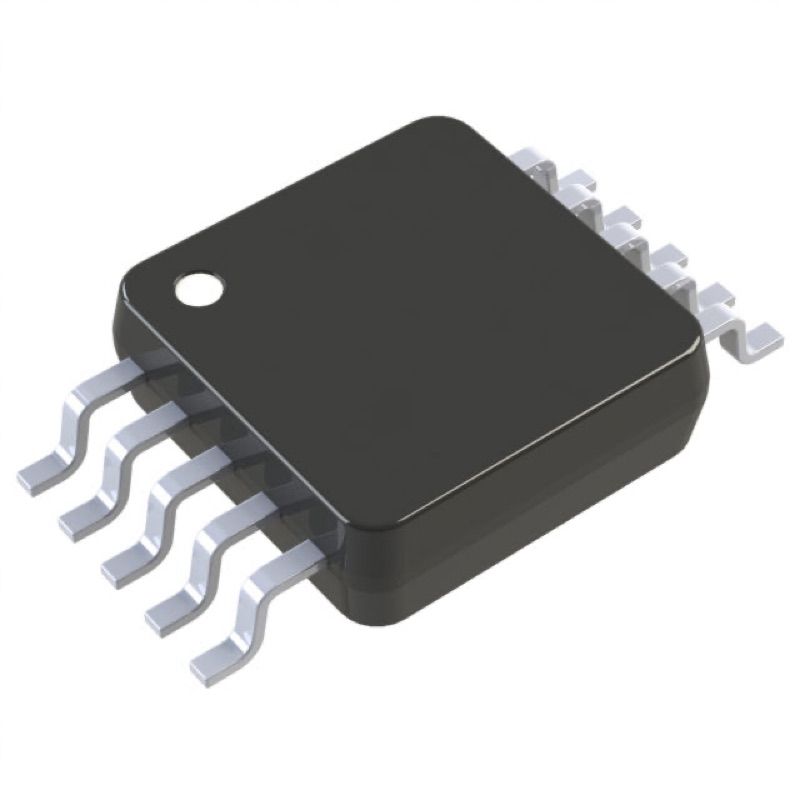
ESD Threats at IO and Power Ports
USB-C, Ethernet, RS-485, and antenna ports see human-body-model discharges that destroy unprotected transceivers. Restar customers specify TVS and multichannel ESD arrays through RFQ with interface speed, clamping, and package constraints.
Selection starts at the stress event: contact discharge level required by IEC 61000-4-2 for product certification, and whether ports are hot-pluggable.
This guide maps interface types to common TVS families and procurement pitfalls during allocation.
Parametrics: Clamping, Capacitance, and Leakage
High-speed USB and HDMI need low capacitance ESD devices to preserve eye diagrams; clamping voltage must remain below the transceiver absolute max at expected surge currents.
Power rail TVS must coordinate with fuse or eFuse trip points—clamping below downstream IC ratings but above normal operating ripple.
Find related discrete semiconductors and digital isolators on one RFQ for consolidated lead-time planning.
Placement and Routing Discipline
Place ESD devices closest to the connector, with short paths to ground planes. Procurement should not approve alternates with different pinouts that force via stubs.
Document whether flow-through or common-anode arrays are required so Restar does not propose functionally similar but layout-incompatible parts.
Use passive networks for series resistors and CMF arrangements when datasheets recommend hybrid protection.
Automotive and Industrial Surges
Load dump and ISO7637 environments need higher energy TVS or suppressors; automotive lines belong on AEC-Q101 qualified MPNs with explicit RFQ notes.
Industrial fieldbus may need gas discharge tube plus TVS staged protection—capture hierarchy on BOM comments.
Read news on shortage cycles affecting popular SOT-23 TVS arrays.
Sourcing Authenticity and Date Codes
ESD devices are frequent counterfeiting targets during shortages. Restar franchise paths include manufacturer traceability; broker mixes require customer opt-in.
Request reel size compatible with high-mix EMS feeders when quoting small arrays.
Search categoryAll then anchor MPNs on RFQ.
Restar Quoting Practices
Quotes include clamping curve references, lead time, and hub stock for each interface class you declare.
Combine TVS with MLCC bulk caps on the same PO where voltages align to reduce customs handling.
Submit RFQ at RFQ with interface label per line (e.g., USB2, ETH, CAN).
Restar editorial and inside sales teams treat every BOM line as a lifecycle decision: factory lead time, hub availability in Shenzhen, MOQ/SPQ, and reel size are quoted together so planners can reconcile MRP dates with realistic inbound receipts rather than binary in-stock flags.
When you upload spreadsheets to the RFQ portal, include full manufacturer suffixes, target build dates, and whether ranked alternates are approved. Restar matching uses franchise datasheets, PCN notices, and parametric filters—not unverified cross-reference aggregators—to propose A/B alternates.
For automotive, industrial, and telecom programs, Restar can provide lot traceability, MSL discipline, and incoming inspection summaries on request, aligning component packaging with your EMS paste, reflow, and depanelization rules to reduce combined failure modes on passives and discretes.
After exploratory searches on categoryAll, anchor approved MPNs on the RFQ to minimize quote churn. Monitor the news center for lead-time drift and EOL advisories so you can reserve factory slots for long-lead capacitors, PMICs, and RF modules before allocation hardens.
If export compliance or AEC-Q qualifications apply, declare them in RFQ notes so quotes attach the correct document paths for RoHS, REACH, and PPAP expectations before purchase order release.
Authenticity matters on shortage markets: Restar does not blend anonymous broker lots with franchise inventory without explicit customer consent, and can escalate X-ray or decapsulation on directed sample lots for high-risk legacy MPNs.
Combine RFQ lines that ship together—MLCC bulk caps, ESD/TVS devices, RF connectors—to optimize freight, customs, and invoice alignment on Shenzhen outbound handling.
Design reviews should capture DC bias, temperature corners, and flex stress for every MLCC downsize decision; procurement can only source reliably when engineering context travels with the BOM.
Restar editorial and inside sales teams treat every BOM line as a lifecycle decision: factory lead time, hub availability in Shenzhen, MOQ/SPQ, and reel size are quoted together so planners can reconcile MRP dates with realistic inbound receipts rather than binary in-stock flags.
When you upload spreadsheets to the RFQ portal, include full manufacturer suffixes, target build dates, and whether ranked alternates are approved. Restar matching uses franchise datasheets, PCN notices, and parametric filters—not unverified cross-reference aggregators—to propose A/B alternates.
For automotive, industrial, and telecom programs, Restar can provide lot traceability, MSL discipline, and incoming inspection summaries on request, aligning component packaging with your EMS paste, reflow, and depanelization rules to reduce combined failure modes on passives and discretes.
After exploratory searches on categoryAll, anchor approved MPNs on the RFQ to minimize quote churn. Monitor the news center for lead-time drift and EOL advisories so you can reserve factory slots for long-lead capacitors, PMICs, and RF modules before allocation hardens.
If export compliance or AEC-Q qualifications apply, declare them in RFQ notes so quotes attach the correct document paths for RoHS, REACH, and PPAP expectations before purchase order release.
Authenticity matters on shortage markets: Restar does not blend anonymous broker lots with franchise inventory without explicit customer consent, and can escalate X-ray or decapsulation on directed sample lots for high-risk legacy MPNs.
Combine RFQ lines that ship together—MLCC bulk caps, ESD/TVS devices, RF connectors—to optimize freight, customs, and invoice alignment on Shenzhen outbound handling.
Design reviews should capture DC bias, temperature corners, and flex stress for every MLCC downsize decision; procurement can only source reliably when engineering context travels with the BOM.
Restar editorial and inside sales teams treat every BOM line as a lifecycle decision: factory lead time, hub availability in Shenzhen, MOQ/SPQ, and reel size are quoted together so planners can reconcile MRP dates with realistic inbound receipts rather than binary in-stock flags.
When you upload spreadsheets to the RFQ portal, include full manufacturer suffixes, target build dates, and whether ranked alternates are approved. Restar matching uses franchise datasheets, PCN notices, and parametric filters—not unverified cross-reference aggregators—to propose A/B alternates.
For automotive, industrial, and telecom programs, Restar can provide lot traceability, MSL discipline, and incoming inspection summaries on request, aligning component packaging with your EMS paste, reflow, and depanelization rules to reduce combined failure modes on passives and discretes.
After exploratory searches on categoryAll, anchor approved MPNs on the RFQ to minimize quote churn. Monitor the news center for lead-time drift and EOL advisories so you can reserve factory slots for long-lead capacitors, PMICs, and RF modules before allocation hardens.
If export compliance or AEC-Q qualifications apply, declare them in RFQ notes so quotes attach the correct document paths for RoHS, REACH, and PPAP expectations before purchase order release.
Authenticity matters on shortage markets: Restar does not blend anonymous broker lots with franchise inventory without explicit customer consent, and can escalate X-ray or decapsulation on directed sample lots for high-risk legacy MPNs.
Combine RFQ lines that ship together—MLCC bulk caps, ESD/TVS devices, RF connectors—to optimize freight, customs, and invoice alignment on Shenzhen outbound handling.
Design reviews should capture DC bias, temperature corners, and flex stress for every MLCC downsize decision; procurement can only source reliably when engineering context travels with the BOM.
Restar editorial and inside sales teams treat every BOM line as a lifecycle decision: factory lead time, hub availability in Shenzhen, MOQ/SPQ, and reel size are quoted together so planners can reconcile MRP dates with realistic inbound receipts rather than binary in-stock flags.
When you upload spreadsheets to the RFQ portal, include full manufacturer suffixes, target build dates, and whether ranked alternates are approved. Restar matching uses franchise datasheets, PCN notices, and parametric filters—not unverified cross-reference aggregators—to propose A/B alternates.
For automotive, industrial, and telecom programs, Restar can provide lot traceability, MSL discipline, and incoming inspection summaries on request, aligning component packaging with your EMS paste, reflow, and depanelization rules to reduce combined failure modes on passives and discretes.
After exploratory searches on categoryAll, anchor approved MPNs on the RFQ to minimize quote churn. Monitor the news center for lead-time drift and EOL advisories so you can reserve factory slots for long-lead capacitors, PMICs, and RF modules before allocation hardens.
If export compliance or AEC-Q qualifications apply, declare them in RFQ notes so quotes attach the correct document paths for RoHS, REACH, and PPAP expectations before purchase order release.
Authenticity matters on shortage markets: Restar does not blend anonymous broker lots with franchise inventory without explicit customer consent, and can escalate X-ray or decapsulation on directed sample lots for high-risk legacy MPNs.
Combine RFQ lines that ship together—MLCC bulk caps, ESD/TVS devices, RF connectors—to optimize freight, customs, and invoice alignment on Shenzhen outbound handling.
Design reviews should capture DC bias, temperature corners, and flex stress for every MLCC downsize decision; procurement can only source reliably when engineering context travels with the BOM.
Restar editorial and inside sales teams treat every BOM line as a lifecycle decision: factory lead time, hub availability in Shenzhen, MOQ/SPQ, and reel size are quoted together so planners can reconcile MRP dates with realistic inbound receipts rather than binary in-stock flags.
When you upload spreadsheets to the RFQ portal, include full manufacturer suffixes, target build dates, and whether ranked alternates are approved. Restar matching uses franchise datasheets, PCN notices, and parametric filters—not unverified cross-reference aggregators—to propose A/B alternates.
For automotive, industrial, and telecom programs, Restar can provide lot traceability, MSL discipline, and incoming inspection summaries on request, aligning component packaging with your EMS paste, reflow, and depanelization rules to reduce combined failure modes on passives and discretes.
After exploratory searches on categoryAll, anchor approved MPNs on the RFQ to minimize quote churn. Monitor the news center for lead-time drift and EOL advisories so you can reserve factory slots for long-lead capacitors, PMICs, and RF modules before allocation hardens.
If export compliance or AEC-Q qualifications apply, declare them in RFQ notes so quotes attach the correct document paths for RoHS, REACH, and PPAP expectations before purchase order release.
Authenticity matters on shortage markets: Restar does not blend anonymous broker lots with franchise inventory without explicit customer consent, and can escalate X-ray or decapsulation on directed sample lots for high-risk legacy MPNs.
Combine RFQ lines that ship together—MLCC bulk caps, ESD/TVS devices, RF connectors—to optimize freight, customs, and invoice alignment on Shenzhen outbound handling.
Design reviews should capture DC bias, temperature corners, and flex stress for every MLCC downsize decision; procurement can only source reliably when engineering context travels with the BOM.
Restar editorial and inside sales teams treat every BOM line as a lifecycle decision: factory lead time, hub availability in Shenzhen, MOQ/SPQ, and reel size are quoted together so planners can reconcile MRP dates with realistic inbound receipts rather than binary in-stock flags.
When you upload spreadsheets to the RFQ portal, include full manufacturer suffixes, target build dates, and whether ranked alternates are approved. Restar matching uses franchise datasheets, PCN notices, and parametric filters—not unverified cross-reference aggregators—to propose A/B alternates.
For automotive, industrial, and telecom programs, Restar can provide lot traceability, MSL discipline, and incoming inspection summaries on request, aligning component packaging with your EMS paste, reflow, and depanelization rules to reduce combined failure modes on passives and discretes.
After exploratory searches on categoryAll, anchor approved MPNs on the RFQ to minimize quote churn. Monitor the news center for lead-time drift and EOL advisories so you can reserve factory slots for long-lead capacitors, PMICs, and RF modules before allocation hardens.